
Firmaty · Had Soualem, Morocco
Firmaty is a two-hectare permaculture practice established within a pressured peri-urban landscape. A first water-security and learning inquiry can be shaped only from Assyl Elazzaoui's own account of the present need and his agreement.
The first inquiry can hold paid local time, water and demand mapping, simple tests and a useful French Return shaped with Assyl Elazzaoui. Its scope and payment route remain to be agreed.
Any deeper-groundwater option follows the relevant permission, hydrogeological assessment, water-quality testing and abstraction accounting, and is considered alongside demand reduction, storage, reuse, soil cover and irrigation efficiency. Next return: Assyl Elazzaoui's own account of the present need and the question he finds useful to examine.
What is here
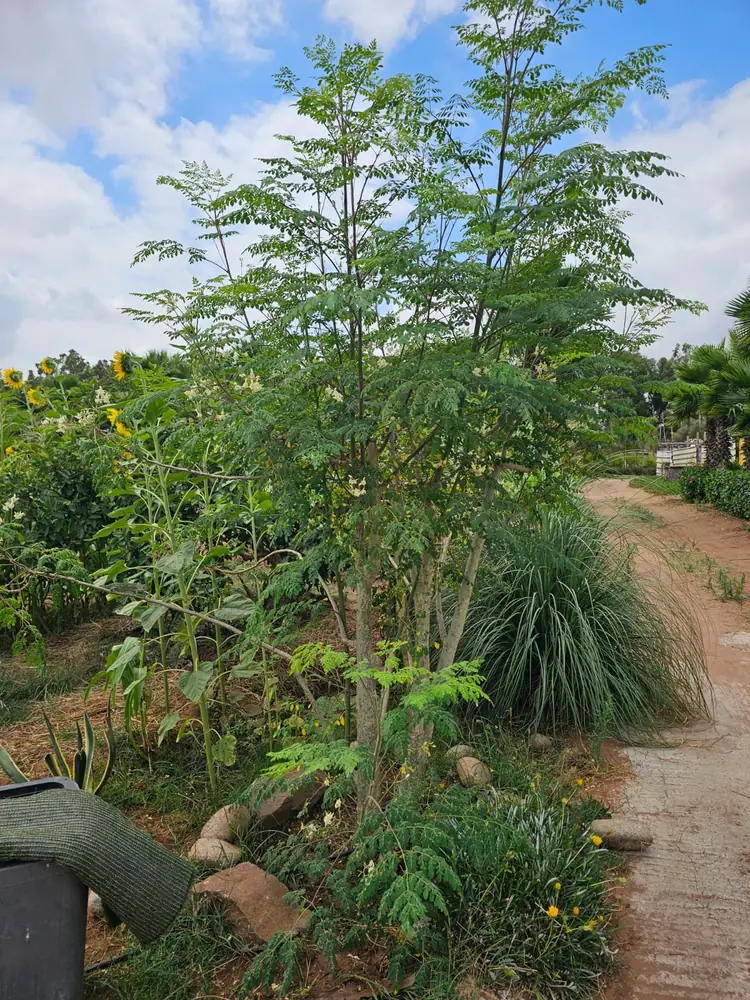
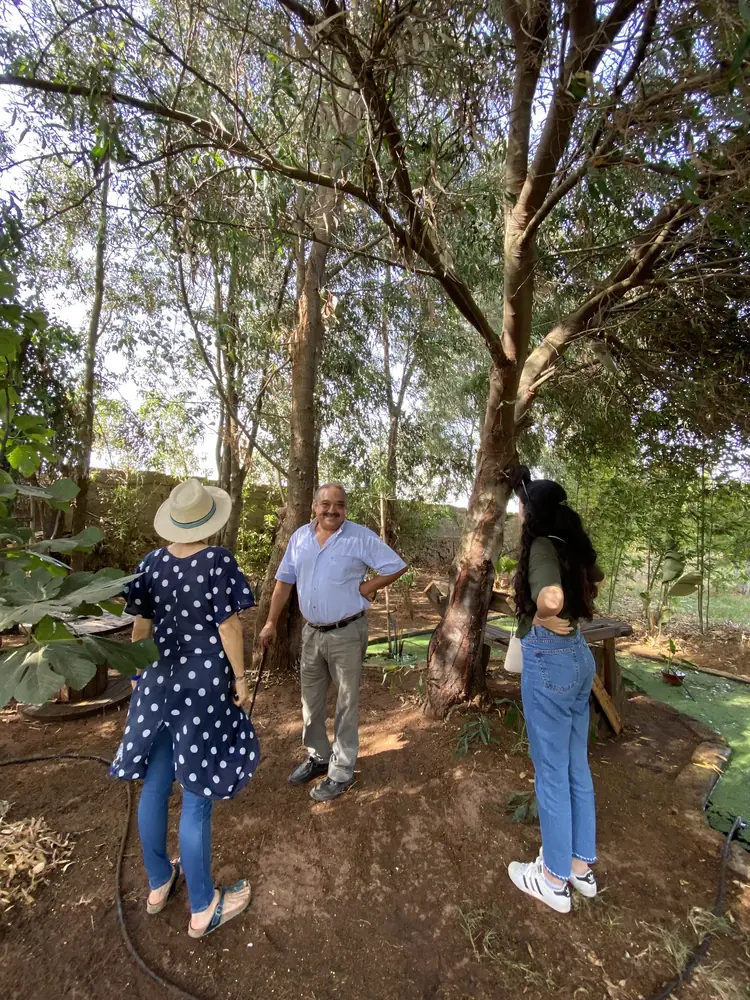
At Firmaty, Assyl Elazzaoui has cultivated this 2-hectare site as a working permaculture practice. It produces food and includes established attention to plant diversity, soil cover and careful water use. These are visible features of the site; their ecological and economic performance has not yet been established through a shared Spiralweb baseline.
Had Soualem lies within a pressured peri-urban and agricultural landscape near Casablanca. Recurrent drought, groundwater stress, land-use change and competing agricultural, urban and industrial demand form the wider context. Published regional figures can orient the inquiry, but they do not constitute a hydrogeological assessment of Assyl Elazzaoui's site.
The site is a productive green pocket within that landscape. Its wider significance remains a question to investigate: what can be sustained locally, what depends on outside inputs, what pressures are actually present at site level, and what learning can be shared without presuming that one place is a model for another.
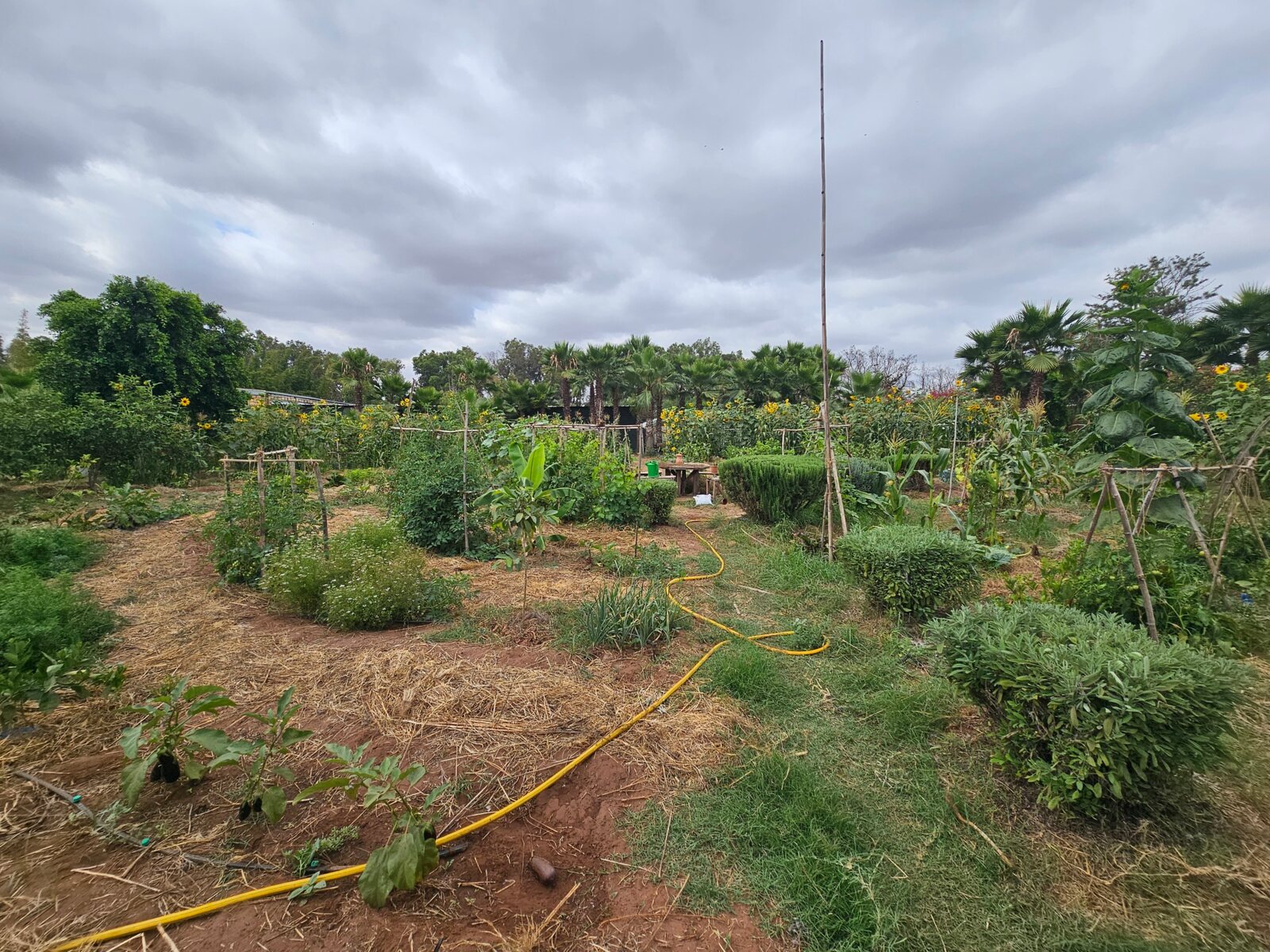
The first living question
Before a technology list or water plan, the shared work needs Assyl Elazzaoui's own question: what part of the present water situation matters enough to examine together, and what return would be useful?
A simple first conversation might map sources, seasonal reliability, use, storage, irrigation, labour, cost and legal constraints. This has not begun as a shared Spiralweb process.
In 2024, Assyl Elazzaoui raised the possibility of more reliable water access, including a deeper borehole. It remains a question, not a recommendation. Any technical option follows only after local need, present water use, legal conditions, maintenance and lower-demand alternatives are understood.
No borehole, pump, reuse system, earthwork, fog collection or other intervention is selected. The next step is a conversation, if Assyl Elazzaoui wants it — not a technical design.
A different beginning in a shared learning pathway
Firmaty brings established cultivation to the conversation about water, shade, living soil and food. Ferme Badaoui starts from different conditions. Their experience can travel between them without assuming a shared aquifer, a common design or an identical sequence.
If Assyl Elazzaoui wishes to proceed, a first portion could map the present water situation, examine the question he chooses and return a useful comparison of options. Further work would follow that review, a locally agreed budget and available resources. Read the Morocco learning pathway →
A small site within a larger landscape
A small, well-tended site may remain vulnerable when surrounding water, habitat and land-use pressures intensify. That does not make the site insufficient, and greenness alone does not establish long-term resilience. The relevant conditions need to be observed over time.
The next question is not how Assyl Elazzaoui's practice should automatically be extended outward. It is what Assyl Elazzaoui wishes to share, what neighbouring stewards recognise as useful, and what can be exchanged without imposing costs, technologies or a single model.
A possible Green Hub function is being explored: a locally held place for plants, practical learning, water inquiry and exchange. It becomes a network node only if Assyl Elazzaoui and other local participants decide that the function is useful and can be sustained.
What may be prepared
If Assyl Elazzaoui finds a shared water inquiry useful, a first movement could be one conversation, one bounded question and one locally useful return. Only then would the participants decide whether any observation, comparison of options or continued cycle is worth the effort.
A PG Ledger or recurring format is not a prerequisite. No regular shared recording rhythm or technology pilot is active.
No shared PG Ledger practice active
Observation prompts, recording rhythm, consent and public access will be agreed with the steward before any shared record is activated
Current inquiry and evidence status
Assyl Elazzaoui's existing permaculture practice remains distinct from any future shared Spiralweb inquiry. No protocol, shared field record or regular evidence cadence is active.
Had Soualem is part of a forming Morocco regional learning constellation alongside Doukkala (possible field cycle in readiness, Abdelhamid Badaoui) and Casablanca (relationship and coordination, Ingrid Pullar). Different places, scales and roles. Shared questions; no assumption of one bioregion or one model.