
Kitgum
The Kitgum relationship is grounded in a long-standing connection with Akena Patrick and conversations that have included village elders. The present phase is drought response and readiness. Spiralweb provides structural support; local judgement governs whether and when any field cycle begins.
Kwan lok me Kitgum i leb Acholi.
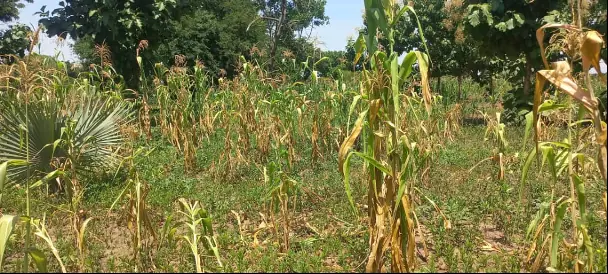
The September report describes continuing drought pressure and preparation despite hard, dry ground. Nursery beds are being watered with cans, while larger planting waits for rain and local judgement. Preparation and care continue at the scale the conditions can carry.
The work includes nursery care, visits to household growers and preparation for further practical learning. Gold Before Bloom means that planting is matched with what water, soil, people and timing can sustain.
The horizon could create practical room for locally agreed roles, including Akena Patrick's stewardship capacity, to carry drought response and readiness: food and water pressure, steward time, community work, transport and communication, nursery materials, watering cans, tools, seedlings, fencing, grafting learning, locally useful documentation and the first accountable field movements.
Fundraising is open while the Kitgum Partnership Protocol, corrected budget, recipient route, co-holders and first tranche are prepared. Funds move when these agreements can hold them; later tranches follow what the first movement teaches.
Kitgum Community Foundation's September report describes nursery beds prepared despite hard, dry ground, watering with cans and preparation for vegetable seeds. Home visits connect the group with people already growing elements of food forests around their homes. Discussions with banana and passion-fruit growers are preparing practical learning for village participants.
These are reported local activities, distinct from the first funded shared cycle being prepared with Spiralweb. The July photographs below remain a dated record of drought stress.
Next return: corrected local budget, recipient route, named co-holders, Partnership Protocol and first tranche decision.
What is being held and prepared here
Participants in the January meeting welcomed the direction of borehole-centred food-forest plots and connecting household practices. The detailed planting design remains conditional. Planting, role allocation and regular observation begin only when rain, local judgement, available species, fencing and field readiness allow.
Schools and intergenerational learning are part of the proposed direction. Specific roles for children, elders and other participants will be agreed locally when a first field cycle is ready; they are not yet an active operating structure.
Shared Spiralweb roles and scope forming
Conversations have included village elders
Northern Uganda
Possible syntropic agroforestry
Soil, water & community learning
Drought and field observations
Meeting notes
Photo and video documentation
No regular shared cadence active
Documentation is event-led and proportionate. It may be added when relevant field visits or events already occur; no fixed reporting cadence or separate reporting journey is required.
Local organisation and the next agreement
KCF has shared a description of its local officers, a constitution and a financial policy. These provide a more concrete basis for discussing responsibility and the recipient route. Applicable organisational documentation, banking arrangements, the shared scope and roles, the budget and first payment conditions remain to be confirmed.
The next learning questions grow from the work already present: how nursery plants can survive dry conditions, what household cultivation can teach, and how water, protection, skills and paid local time can support the next planting season. Observations should assist this work and return something useful to the people carrying it.
Community meeting · 9 January 2026
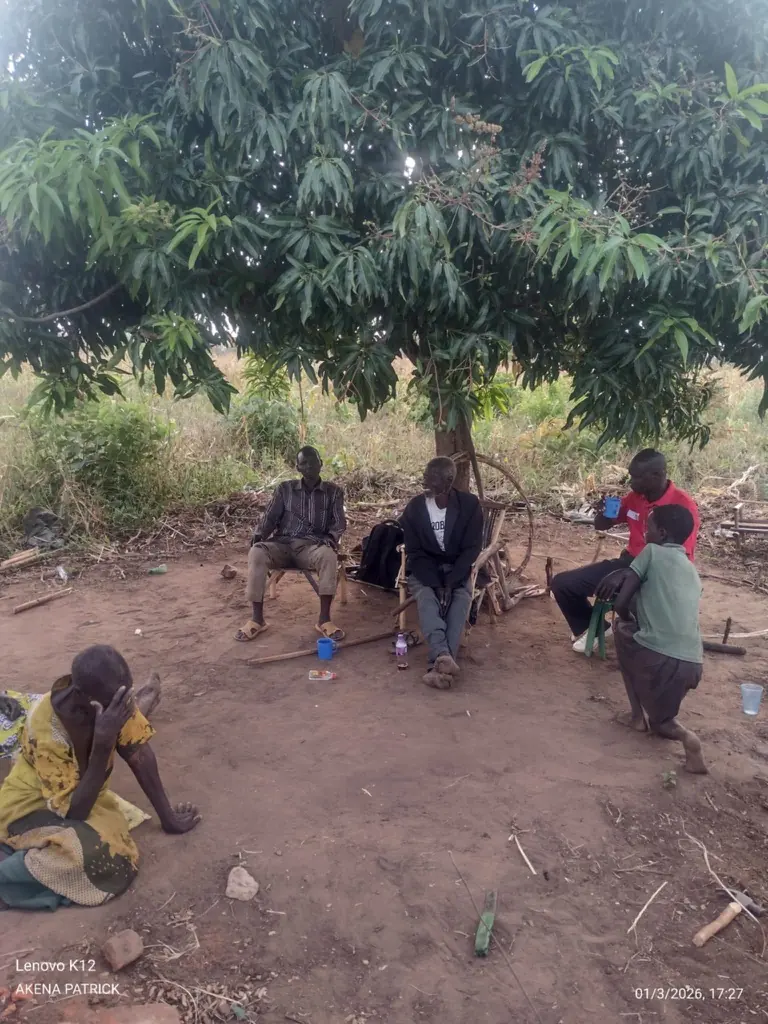
The first formal engagement meeting took place on 9 January 2026, with Lars A. Engberg joining online from Denmark. The following statement was recorded from participants in the meeting:
The project is highly welcome and with whole heart. They have accepted to give the 10m² and more plots of land for the project. Each and every member is very willing and ready to give a plot of land so that each household is having a Food Forest Farm.
The January quotation above is retained as dated provenance. It records the welcome and land proposal voiced at that meeting; it does not by itself establish a whole-community mandate. Its 10 m² language is not a current required unit, funding unit or observation cadence.
Recorded at the meeting
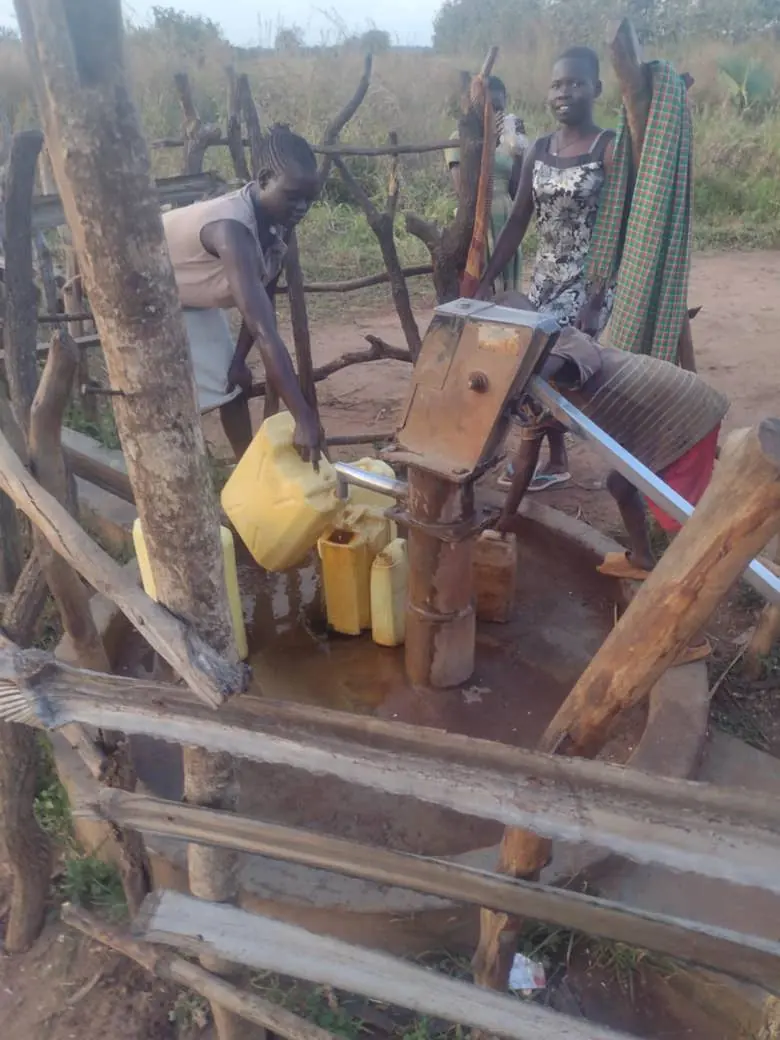
Land plots near the borehole were discussed and offered in January. The July record later showed drought stress, and the September report describes continuing nursery preparation and local exchange. The original planting, soil preparation and grafting ideas remain open to correction as rain, available species and field readiness become clear.
Raised at the meeting
Need for fencing using barbed wire and wood poles to protect against stray animals. Request for training on grafting of fruit plants — mangoes and oranges specifically. Proposal for grassroots leaders to support field management alongside Akena Patrick.
First species requested by community
Early planning archive — not current field method
Earlier versions of this page carried a candidate spiral guild, a possible 12-week first-cycle sequence and thirteen draft “Gold Nuggets”. They belong to the design history of the Kitgum relationship. They are not current field instructions, an activated protocol, a required cadence, a universal scale or a validated local method.
If planting becomes appropriate, the design will be made from current rain, water, soil, species availability, fencing, community capacity and local judgement. Earlier sketches may be consulted, changed or set aside.
Method & evidence status
A longer-term concept exists for solar-powered connectivity at community locations. It is not a current field priority or an activated commitment. Food, water, steward viability and field readiness come first.
Support mechanism
Support is read across the three non-compensatory Penguin streams — Land / Life, Steward Viability and Governance / Commons — while financial transactions remain separately traceable. This horizon establishes the first shared capacity envelope; allocations, releases, accounts and Returns will be added as they occur.
Spiralweb publishes only what it can hold with care. This page will grow as field notes, observation logs, and documentation are verified and ready to share.
Kitgum may offer learning for other places; it is not a rigid model.