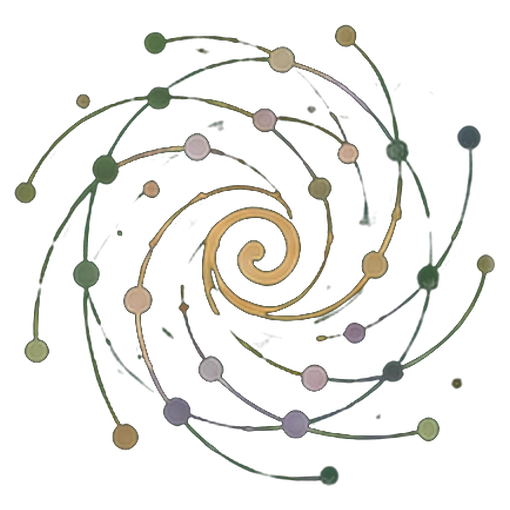

A forming governance and protocol architecture for co-creation: connecting ethical and governance principles with place-based relationship, observation, support, correction and stewardship — and allowing field learning to return. Public knowledge materials are held with explicit status; publication does not establish field activation, universal validity or authority.
What this is
Planetary Guardians is a governance and protocol architecture for place-based ecological stewardship, developed since 2019 and drawing on more than two decades of prior governance research. Spiralweb Stewardship Association is its present Danish organisational home. The earlier website at planetaryguardians.global is retained as historical documentation and is no longer maintained as a current account; current work connected to Planetary Guardians is developed through Spiralweb Stewardship Association. Planetary Guardians is not a single protocol, certification scheme, investment product, universal field method or claim of authority over local stewards.
Planetary Guardians has developed since 2019 not only through research and architecture, but through a wider field of conversations, encounters and relationships among many people and places. Some connections were brief, some continued over years, and some now inform Spiralweb’s first field processes. The historical website holds part of that earlier ecology; it is not a current membership or partnership register.
The architecture asks how ethical orientation, local relationship, situated observation, support, correction and accountability can be held together without turning living places into standardised programmes. Its public components are intentionally separated by function and status.
The Spiralweb Papers carry the theoretical, constitutional and methodological arguments. The field pages describe real relationships and preparation. The methods and PG Ledger pages describe how inquiry, consent, observation and correction may be organised. None of these elements alone constitutes an activated protocol.
From principles to place — and back
Different documents, different responsibilities
Field relationships and preparation
Protocol materials and status
Public protocol and machine-readable materials are published only when their purpose, scope, consent basis, stewardship, claim boundary, review state and practical status can be stated clearly. No protocol file is presented here as an active universal field kernel.
The Protocol Habitat holds public architecture, papers and tools with document-specific status. A wider maintained protocol library and field-application record remain in formation. Publication alone does not mean that a protocol is active in any field.
We publish only what we can hold with care.
How this connects
- MethodsThe methods layer separates bounded-place entry, situated observation, epistemic responsibility, AI limits and field autonomy.
- FieldsThe field index carries the current operational grammar for each named place or relationship: present position, evidence, agreed action and next return. These are public relationship and operational-status descriptions, not protocol certifications.
- AnchorPointsThe relational and place-based threshold where local partners, stewardship continuity and access to a lived place are held. AnchorPoints are not identical to fields or protocols.
- PG LedgerThe memory, provenance and traceability layer through which situated records can remain connected to source, uncertainty, decisions, flows and later correction. Categories and rhythms remain place-bound, consensual and correctable.
- Penguin DashboardThe shared human reading surface that can use selected evidence to support bounded judgment and next actions. It is distinct from the Ledger, and neither governs.
- Green PapersThe versioned public knowledge commons holds papers, protocols, tools and field documents with explicit type, version, publication status and operational status.
The invitation
Planetary Guardians invites local stewards, practitioners, researchers, public institutions, funders and other organisations to bring their distinct capacities into responsible relationship with a place, stewardship practice, inquiry or shared challenge. No one needs to adopt Spiralweb vocabulary or join a central programme in order to contribute.
Different participants may carry different forms of authority, knowledge, mandate, continuity and resources. A good bridge makes those differences usable and accountable: institutional responsibility remains visible, local authority is not displaced, and the shared work can be corrected by what happens in the field.
Entry may begin through a place, careful inquiry or dialogue. A first conversation creates no automatic entitlement to representation, funding, review or support; it tests whether a clear role, bounded movement and useful return can be shaped together.
A note on the name
Planetary Guardians began in 2019 as an independent initiative.
In January 2023, Johan Rockström contacted Lars Engberg about a separate initiative that was also preparing to use the name Planetary Guardians. Engberg confirmed that they were welcome to do so. The separate initiative can be found at planetaryguardians.org.
The two initiatives have distinct origins and governance. The shared name reflects permission to coexist, not organisational continuity, representation or affiliation.